
"We're the Rhydo, Kid!"
I have friends everywhere.

Capitalism is a cancer.
I do not present this metaphor because it is poetic; in fact, it is a cliché. I do not indulge the cliché because it is compelling; in fact, it is dull. Yet not all dull truths are the dullard’s domain.
A fundamental and necessary preoccupation of revolutionary thought is analysis of reproduction. I do not mean sexual reproduction, although this is material to the reproduction of institutions such as the family and capitalism in particular, and to human activity generally, but rather any means by which social systems create and recreate themselves. The revolutionary’s business is not destruction. This is a misconception. Their concern is recreation that breaks from creation.
A Marxian analysis of capitalism yields, as the Three Laws of Robotics from Hollywood’s “I, Robot” — an adaptation of Isaac Asimov’s work to which I am seemingly alone in being partial — only one logical outcome. It will be a revolution. But whose revolution?
Capitalism, in order to reproduce itself, continually requires greater and greater extraction. The rate of profit tends to fall, and the historical development of financialization has curated a market where firms must deliver monetary gains hand-over-foot to their investors. As such, capitalism deterministically rushes towards annihilation. Capitalism revolutionizes the world through destruction. We cannot have this.
What, then?
A socialist revolution, and here I mean socialist in the general sense exclusive of liberal Social Democracy but inclusive of a broad sense of post-capitalist potentialities engendered by the communist impulse to abolish the present state of things, must instead revolutionize through creation by intervening on recreation (reproduction) to prevent that destruction. It must be an anti-apocalyptic movement, a challenge of supreme difficulty in the era of climate collapse.
What then?
When, therefore, we understand that capitalism is killing us through reproduction, we can finally compare it materially to cancer, which kills the body through the reproduction of cells. Cancer, properly understood, cannot be cured, but it can be fought with intervention, and even beaten. Just so, says the revolutionary.
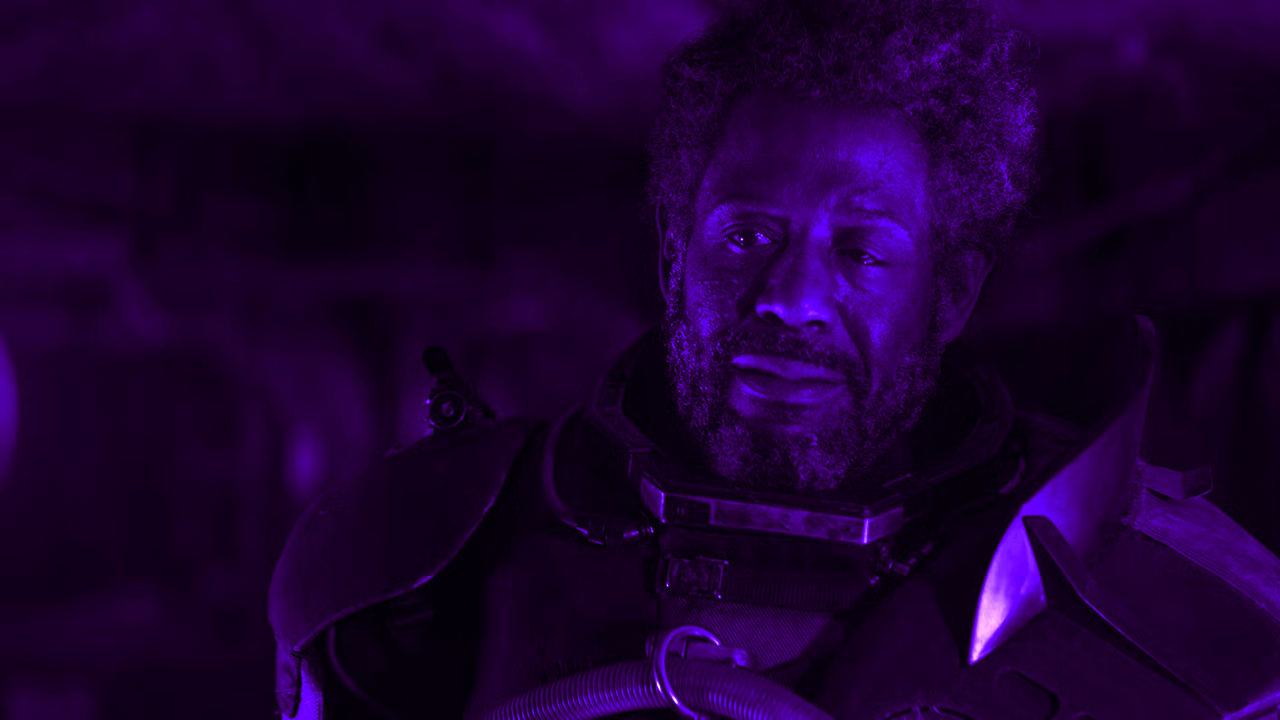
I will reach now for another analogy. In the Disney+ streaming series, “Star Wars: Andor,” the character of Saw Gerrera gives a speech which has gained some notoriety within the fandom. To the young revolutionary Wilmon, he says, “You think I’m crazy? Yes… revolution is not for the sane.” In our political environment, this has naturally connected with audiences.
But Saw has more to say. The characters are stealing a fuel, Rhydo, which explodes violently on significant contact with the air. Saw’s lungs are damaged from taking in trace amounts. “We’re the Rhydo, kid,” he continues. “We’re the fuel. We’re the thing that explodes when there’s too much friction in the air. Let it run free! Let it run wild!” Wilmon removes his mask and voluntarily struggles to breathe. Earlier, Saw remarks, “I’ve always loved you,” before directly breathing in the fumes of the Rhydo. Wilmon, aghast, asks how he can do that. Saw responds, “Because I understand it. Because she’s my sister, Rhydo, and she loves me.” The damage to his body is long done, but it is his kinship with the Rhydo that causes him to return to it.
In resisting the liberal co-option of nonviolence, especially its complicity in maintaining a legal system that prevents the revolution of the workers, socialist movements have trended towards a general endorsement of violence. Yet these same supposed revolutionaries often balk at criminality. Violence as a concept is more unilaterally rhetorically endorsed than prison abolition, and lip service for police abolition is often merely that. This is not a revolution. Not yet.
In 2011, dissatisfaction with the Obama administration’s treatment of 2008’s “Great Recession” led to a peculiar movement called “Occupy Wall Street.” These protesters included shares of left-wing and right-wing individuals of varied perspectives. What they had in common was vague appeals to liberal democratic rhetoric, invocations of “We The People,” a vague notion of economic unfairness, to which the press responded with condescension. What did these lazy college kids know? Our liberal commentators were too satisfied with their own smug elitism to notice that they were entertaining a final gasp of neutrality before a rise in friction. Occupy Wall Street yielded to a precipitous rise in both socialism and fascism. Given the same opportunity, I have no doubt liberal experts would run the same play and fumble the same ball. Their ill management fed directly into the greatest development of capitalist cancer in living memory.
The aforementioned account of Occupy Wall Street is a story, but it is a story of social consciousness fomented by material conditions, economic conditions. The ideological split described represents an inborn conflict, a dialectical development born out of one of liberal capitalism's "contradictions." The state grants citizens their rights but it also defends capital; among those rights is a right to property, yet this cuts against notions of liberty and equality. "We The People" hereby signifies an appeal to two contradictory impulses in liberalism.
In the face of the illegality of the socialist movement, it is only natural for the revolutionaries to be the prison and police abolitionists. Because they must be against capitalism, they must be against the state.
To distinguish the left-wing impulse to endorse violent revolution from the right-wing impulse to revolutionize through violence — in which the cancer advances terminally, which we often recognize in fascism — must be to develop a sense of what it means to see revolutionary violence as a necessary impulse.
This action is illegal. The revolution itself is illegal. War is not the business of the socialist revolutionary because their work is not to revolutionize through destruction. To capitalize on the conflict inborn in these economic injustices for a left-wing goal must be to avert society from the impulse to advance the cancer. Illegality, too, is not the business of the revolutionary. It is an incidental enterprise. Abolition is not incidental. The distinction is paramount.
Abolition of the state and of its apparatuses of repression that reinforce not merely bourgeoisie domination of the proletariat but also the very nature of what constitutes the proletariat, those rights of property and those defenses of it, and the reproduction of them all, is the mission of communists everywhere if they are worthy of the name.
Society must continue, but by other means. Human activity must be turned to other ends. But we are those humans, though not as we know them. We’re the fuel. We meet the friction in the air. The dream deferred must explode.
The revolutionaries will run wild. The prisoners will run free.
Because he’s my brother, that murderer, and he loves me.