
Rebekah on Mount Moriah
It is the children who will judge.

"I don't remember it like that."
We were walking in the September morning as the first chills of autumn had blown across the sky. The sun was still out, warm on my back even as the breeze rolled over me, and all was as well as it could be. I had just told my mother that I was jealous of my brother because my parents had supported his pursuit of his degree, but not mine.
"We thought you said you didn't know how to do it."
"I had a path. I could have done it. I just needed help."
"Help?"
"I just needed someone to tell me I could do it and not say no."
The conversation with my mother had turned to my frustration that she had told me not to go to graduate school. I had discovered during the latter years of my undergraduate program that I wanted to pursue my PhD but would need to take potentially a semester off to do so. My parents, several years later, would go on to be wholly supportive of my brother, now teaching with his PhD. I had wanted that. I had said so. "We think you should come home and start looking for work," were my mother's exact words a little over a decade ago.
This reality — my weakness, my capitulation, my need for approval and affection — cut against my parents and their philosophy. At every turn, when I needed to stand up for myself, I was the only one doing so. Support in my family was private, behind the scenes, meant to produce a peaceful situation, but just as sometimes one person's peace is another person's prison, my behind-the-scenes relationship with my parents also included them discouraging me from transitioning as a woman.
It is not unusual, even in my family specifically, for older siblings to make choices that are really not their choices. Some of us have been told what was required or expected of us and we have been the experiment child, the child who gets less so that someone else can have more. It is a trope of the stories we tell about ourselves precisely because it keeps happening. But my family did not need me to make that sacrifice; in my case, they specifically called for it because of what they believed was good for me. When it was my brother's time, what was good had changed.
There are many versions of this story. I have more than one brother; for my youngest brother, his disability means he has often been afforded more accommodations, more support and — what alone feels egregious and frustrating among these outcomes — more patience. But he needs them more.
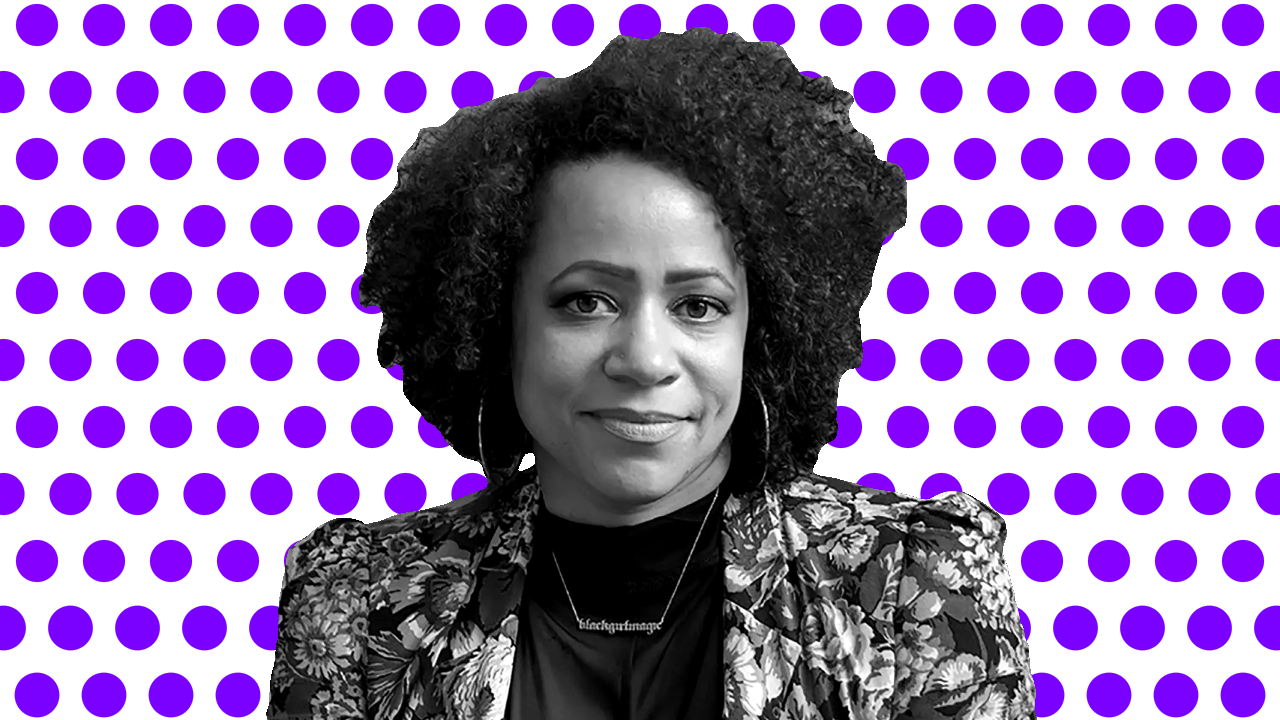
At around the same time as this conversation, another conversation was occurring. The writer, Nikole Hannah-Jones, of the New York Times piece, "Choosing a School for My Daughter in a Segregated City," penned another piece just recently, titled, "In Fighting for Every Black Child, Did I Betray My Own?" In it, she makes arguments around racial segregation and the abandonment — my word, not hers, as I believe it to be true — of Black communities in these United States of America by the very structures so often purported to emancipate and desegregate them.
It is true that these schools, and many other facets of our society, experience a kind of du jour segregation. American racial segregation — like slavery in some ways — did not end. It only evolved.
How can anyone commenting on this situation deny that sometimes our brothers need what we do not? White political commentators have not often extended this understanding to Black political commentators. We are poorer for it.
If the reader will allow me, as a White writer, the following two indulgences by way of citation, I would like to suggest that Nikole Hannah-Jones's point in her article has been subject to a proxy attack. Critique of a parent's relationship to their child will always be open, as unequal power dynamics must always be subject to proportional scrutiny. This scrutiny has not been proportional. Nowhere have I seen in the words of White commentators, or "centrist" and right-wing commentators generally, any acknowledgement of the legacy of her thinking and how right she is.
None of these critics have acknowledged, for example the words of Dr. Martin Luther King Jr. when he said, "I think integration in public schools is different," and remarked of White teachers that, "People with such a low view of the [Black] race cannot be given free rein and put in charge of the intellectual care and development of our boys and girls." They neglect also the words of former President Barack Obama, who wrote in his days as a lawyer that integration had become a "one-way street." When, in the back half of the article, Nikole Hannah-Jones notes that her daughter had trouble in a white-majority school due to racial discrimination and interpersonal prejudice, no one who understands the motivation for her decision should be surprised.
Yet it also cannot go unremarked upon that there is an open question: who decides who needs what? A parent is in a tricky position. They do make decisions based on what they understand their child's needs to be, but they cannot dictate those needs themselves. They can only observe them; they have authority over the child, but ultimately if they do not practice some deference to their child, they will never know them, never treat them right, never be who they need to be. A parent chooses this. A child does not.
Nikole Hannah-Jones describes, deep into the article, her daughter's resignation at her academic future when looking at prospects in higher education. "'Look at our school, Mom,' Najya told me with a resigned shrug. 'We know we're not going to get in.'" She later acknowledges, "As for Najya, because she'd signed up for the specialized high school exam, I made her take it. But she was right."
One of Najya's earliest indictments of her mother's reasoning is the most merciless. "'So you had money to send me to one of the best schools, and you chose not to?” she said, hurling her words. 'Because other kids are disadvantaged, you didn't want to put me in a great school?' Najya was asking what I'd accomplished by not choosing the 'best' school for her. And the honest answer is, I don’t know. When it comes to the choices my husband and I have made about public education, these days I feel that I failed both my values and my child."
I would here ask the reader to entertain the following: perhaps Nikole Hannah-Jones did fail her child, not because she did not have any rationale for or awareness of her actions and their larger sociopolitical context, but because her child says so. It is Najya's perspective that matters most where her own treatment by those who have power over her are concerned.
In Najya's high school years, Nikole Hannah-Jones describes getting her help. She got tutors, hands-on attention from her teachers, and all manner assistance. This is so clearly not a story of a mother who did not care. But as she writes, "I wanted my child to see it my way, to see the struggles she was having as part of a lineage and a mandate, to understand the tremendous privilege that I believed inoculated her against the worst consequences of the dysfunction and at times educational malpractice that she and her classmates experienced. But now I felt overcome with regret. Najya deserved better. They all did. But she was mine. This girl, my only child, looked to me to protect her, to give her what she needed to thrive. And I had not chosen her."
In further commentary with Michael Harriot, Nikole Hannah-Jones remarked that she "cannot embrace this level of hyper-individualism" that some of her critics seemed to embody. This echoed the way she ends the article, speaking against the abandonment of Black children and comparing her daughter to Ruby Bridges, one of the "Little Rock Nine." She noted she was part of a community. One lone gentleman in the comments of a clip circulating on Instagram responded, "...you assigned a personal act of parenting a symbolic and institutional task that it could not reasonably perform."
I have given much consideration over the years in how I relate to Black political commentary as a White writer. As a queer person, as a gay person, as a trans person, I experience a form of marginalization that similarly places me in community with others. But queers come from everywhere. We occur spontaneously, as a conceptual and behavioral outgrowth of our society. Black children tend to come from Black families.
In many ways, the Black family structure is a boon to Black liberation; for one, queer struggle needs that structure to be created proactively, and it does not reproduce itself as easily. But it is also for that reason that Black politics situated around Black families in Black communities can veer reactionary. The family is class institution; it is not merely complicit in capitalism and racism, it is their kindred spirit in societies that oppress and exploit.
Few choose to see this...
Nikole Hannah-Jones writes, of a cathartic conversation with her daughter where Najya seemed to see the best in her own situations, that, "I realized what she'd been yearning for most was my acknowledgment that she had borne the cost not only of our unjust society but also of my ideals. In this, Najya had become part of a long, unwanted tradition in Black communities. One that it feels as if we will never be free of."
The harshness towards Nikole Hannah-Jones, especially where racial conversations are concerned, has been conduct unbecoming. Her work and her actions are deserving of criticism, but what might have been criticism has instead been overwhelming and washed away by a tide of ill-conceived grievance against what she, in many cases wrongfully, was read to represent.
But it is neither in our hands, nor in the hands of Nikole Hannah-Jones, nor any other commentator, to decide whether she made the right choice in this case. It is up to her child to make that decision. If her daughter feels her mother hurt her, there is nothing we — or she — can say to erase, overcome, or alter that fact, and it will be the truest word on the matter.
It is in the hands of the children.